
Shared flat (WG) in Germany: rules for your first one
Last updated:

For the majority of students, having their own flat is still too expensive. And even if they had enough money for the rent, most would still prefer to live in a shared flat (WG, short for Wohngemeinschaft). This is where they can make their first contacts and form friendships. They also help each other overcome the challenges of starting university. To ensure that everything runs smoothly when living together in a shared flat, all flatmates should stick to a few rules.
The right flatmates and the ‘way of living’
1.) Avoiding problems and conflicts whilst living together starts even before you actually move in. After all, choosing the right flatmates, or integrating well and being happy with the living arrangement (which, ideally, comes close to your own expectations), helps to head off disagreements and annoying stress later on. So, the first step is to consider whether the future shared flat should be purely functional or a lively and friendly living arrangement. Both are fine; it just needs to be clear from the outset what sort of living arrangement you envisage. That needs to be said out loud, and everyone in the flat should be on the same page.

It doesn’t matter whether you’re applying and introducing yourself to a shared flat that has a room free, or whether you’re running a WG casting yourself – in either case, preparation is key. After all, nice rooms in shared flats are hard to come by and the competition never sleeps. That’s why part of your preparation involves knowing which phrases and descriptions most potential future flatmates like to hear – and which will increase your chances of securing a room. Want a few examples?
- I’m easy-going.
- I’m always up for something spontaneous, and I quite enjoy a glass of wine or a beer in the evening.
- I’m a non-smoker; though I might have the odd cigarette at the weekend in a bar or somewhere.
- I’m tidy, but not fussy.
- I’m very laid-back, but of course I stick to the cleaning rota and things like that.
- I also like to get away for the weekend now and then. But we don’t all have to be on top of each other the whole time, do we?
- I don’t often go to wild parties, but they don’t bother me either.
No matter how nice and cosy a flat may look, shared living only works if everyone’s basic attitudes are at least somewhat in line with one another. So whilst it helps to trot out some of the popular phrases mentioned above, if you realise that, at first glance, the others’ personalities don’t really match your own, then it’s better to give it a miss. Otherwise, after a few weeks at the latest, living together can sometimes become quite draining. This ‘way of living’ starts with broader ideas and attitudes – that is, lifestyles and political views – and ends with details such as the cleaning rota and cooking or eating together. Whilst a diverse mix of people is exciting and educational, it shouldn’t be too extreme. Experience shows that extremes don’t tend to mix very well.
Rent and service charges
Most students have to watch their money quite closely throughout their studies. Although many are still supported by their families and get by with one or even two part-time jobs, money is usually tight. That’s why it’s important, even in a shared flat, to ensure that all residents have roughly the same outgoings and that household costs are shared fairly. For shared shopping, for example, a shared kitty (WG-Kasse) works well, with everyone paying in the same amount on a regular basis. A rent account, into which the monthly rent is paid and which is always monitored and checked by at least one resident, is also recommended. Deadlines and ‘penalties’ should be introduced for anyone who fails to stick to the agreements. That might sound very narrow-minded, but it isn’t, because when it comes to money, more than one shared flat – or even friendship – has ended on a sour note.
On top of rent and household shopping, there are the service charges and bills. Electricity, internet and heating are not cheap, especially in larger shared flats. Some people may need to be less careful about leaving electronic devices on standby, whilst others need to be more so. As a shared flat is a communal living arrangement where everyone should look out for and be considerate of one another, it is important to behave in the interests of the community and not to be selfish. This also includes saving energy in the household. This is the only way to ensure that arguments and recriminations don’t arise at some point, and that the harmony within the shared flat isn’t undermined by avoidable financial issues. Incidentally, saving energy isn’t just good for the shared flat, but for the environment too!
The golden rule for shared flats: be considerate and show understanding
If you live on your own, you can turn the music up as often and as loud as you like, invite people round all the time and have parties, and only have to think about your neighbours. Things are different in a shared flat. This is because flatmates are more like family members who notice everything and may well disagree with a lot of it. So you need to be considerate at all times and in everything you do. Parties and similar noisy events should always be announced in advance and agreed upon with all flatmates. If one of them has to get up early the next morning – for example, because they have an important exam – then the party simply has to be postponed. This is the only way to ensure that that flatmate will be just as considerate next time.
Honesty and openness also fall under the category of understanding and consideration. To prevent a major row from breaking out in the shared flat at some point, it is important to address problems and minor irritations. Not every crumb that hasn’t been tidied up needs to be brought up. However, if you feel that something is dampening your enjoyment of living together, then raise the issue in a friendly tone and emphasise that this matter is important to you. The same applies the other way round: if you notice that someone seems to be unhappy about something, speak to them about it at a suitable moment and express your interest in resolving their concerns for the good of the shared flat.
No shared flat without a cleaning rota, agreements & co.
One very specific point that needs to be addressed is the cleaning rota. After all, there are good reasons why almost all shared flats have a cleaning rota. It’s quite simple: nobody actually enjoys cleaning voluntarily. At least not in 99 per cent of cases. Nevertheless, it has to be done, because nobody likes living in a mess either. For this to work in the long term, EVERYONE must stick to the rota. There’s no getting round it. Because as soon as the first person ‘neglects’ their duty, the next one won’t feel like doing it either. And, unfortunately, the flat doesn’t clean itself.
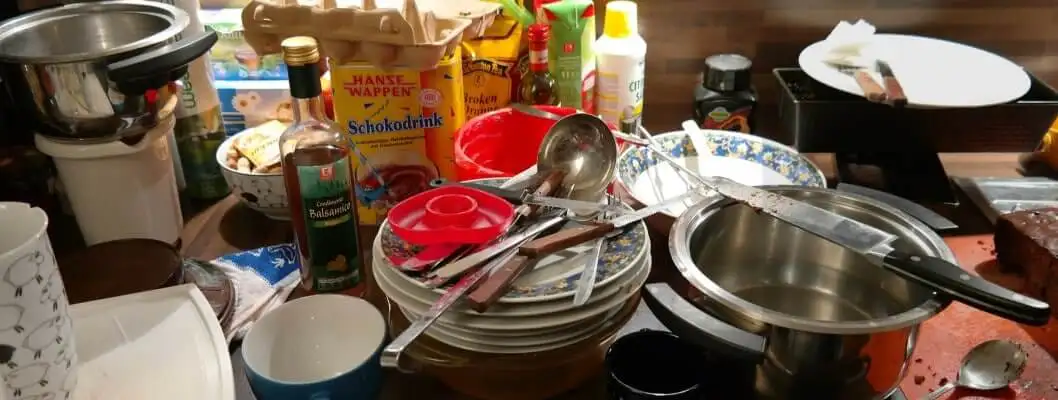
Many shared flats like to do things together to strengthen their bonds and avoid ending up as a purely functional shared flat where everyone just stays in their room and only comes out to eat or use the bathroom. Arrangements such as communal cooking evenings or nights out at a pub are important because they offer an opportunity, on the one hand, to get to know one another better and in a more relaxed way, and, on the other hand, to address issues that are bothering you, or things you may have been pleased about, and so on. Every flatmate should attend these get-togethers. Because as soon as one person is missing, there’s a risk that the others will ‘gang up’ on them. That sounds nasty, but the mere fact that the person is absent and isn’t fulfilling their ‘duty’ provides a basis for the others to conspire against them. So everyone should stick to the agreements and arrangements.
Consideration and understanding are important, and it also helps to be relaxed about your own things. If a flatmate helps themselves to a splash of your milk or some of your olive oil, don’t make a fuss straight away. This is particularly true when it comes to food, cleaning products and similar items. However, you must always ensure that this sort of thing doesn’t get out of hand. Brief remarks such as ‘I had to borrow some of your milk – feel free to help yourself to mine next time’ help to ensure that you live together in a relaxed and respectful manner.